SROT
Domain
Sustainability
Impact
Conservation
Focus
Water
Scale
Community
Context and Problem
In many rural and semi urban areas, there are two problems happening at the same time. On one side, people face water shortage, especially in summer. On the other side, a lot of water from daily activities like: 1. Washing hands 3. Doing laundry 3. Cleaning floors is simply thrown away. For example, a school might use water for handwashing throughout the day, and all of that water goes into drains instead of being reused. This creates three issues: - Useful water is wasted - Soil and groundwater get polluted, and - There is no affordable system to reuse this water Most existing solutions are either too expensive or too complex, so they are not practical for small communities.
Approach & Solution
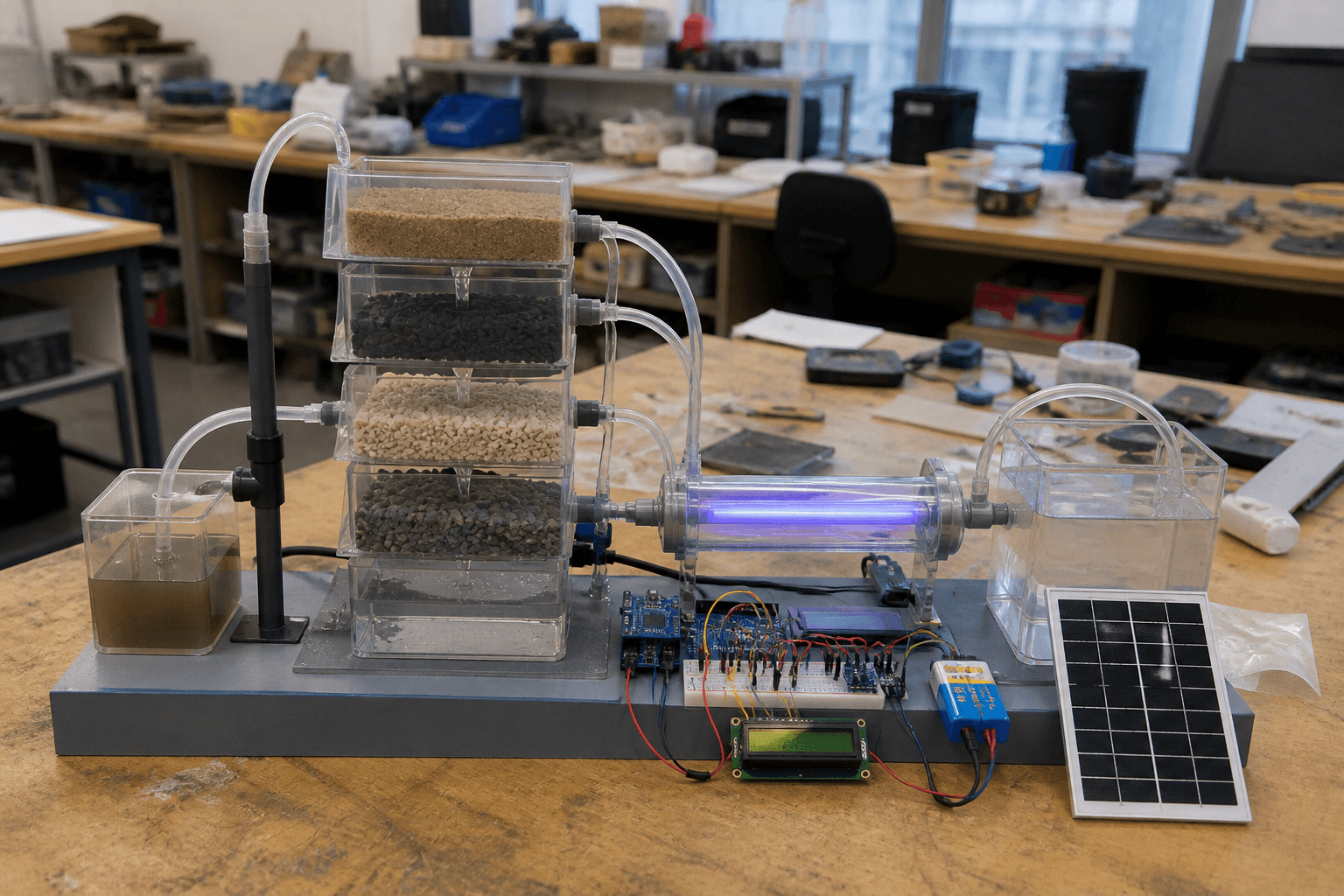
SROT was designed as a simple and low cost system that turns used water into reusable water. The idea was simple: Do not waste water that can still be used again. The system takes greywater from everyday activities and filters it so it can be reused for: - Gardening - Toilet flushing - Cleaning It is designed to be: - Easy to install - Low maintenance, and - Usable even in places with limited electricity
How it works?
The system cleans water step by step using natural filtration. Here is a simple flow: Step 1: Collection Water from sinks or washing areas is collected. Step 2: Removing large waste A mesh filter removes things like hair, food particles, and dirt. Step 3: Separating soap and oil The system slows down water so that grease and soap can separate. Step 4: Natural filtration layers Water passes through layers like: - Gravel - Sand - Charcoal These layers clean the water by removing: - Dirt - Smell, and - Chemical residues Step 5: Plant based cleaning In some cases, plants like vetiver are used to absorb remaining impurities. Step 6: Final cleaning and storage The cleaned water is stored and reused where needed. For example: Water from handwashing in a school can later be used to water plants in the same campus.
Impact and Outcome
The system creates clear and measurable impact. 1. It can reuse around 50 to 100 liters of water per day. 2. This leads to 18,000 to 25,000 liters saved in a year. 3. It can reduce pressure on fresh water sources. 4. It also prevents untreated water from polluting the environment. Beyond numbers, it also creates awareness. In schools, students can: - See how water is reused - Understand sustainability, and - Change daily habits In simple terms: Less waste, more reuse, and better awareness